

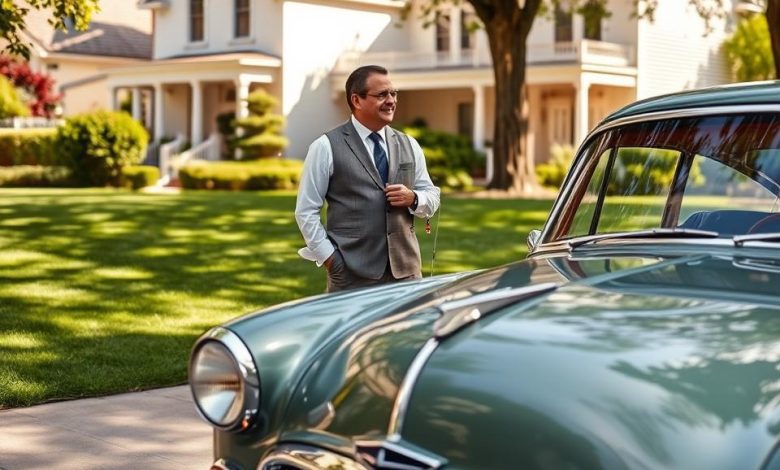
Owning a vintage vehicle is a significant investment that requires special care and protection. As a valuable asset, it demands classic car insurance that understands its unique needs.
The importance of antique car insurance cannot be overstated, as it provides financial protection against unforeseen events such as accidents, theft, or damage. Vintage vehicle owners must consider the risks associated with their prized possessions and take necessary measures to safeguard them. With the right vintage vehicle insurance, owners can enjoy their classic cars with peace of mind, knowing they are protected against financial loss.
Key Takeaways
- Classic car insurance is essential for protecting your valuable vintage vehicle.
- Vintage vehicle insurance provides financial protection against accidents, theft, or damage.
- Antique car insurance is tailored to meet the unique needs of classic car owners.
- Having the right insurance coverage gives owners peace of mind.
- Classic car insurance is a necessary investment for any vintage vehicle owner.
Understanding Classic Car Insurance Basics
Understanding the basics of classic car insurance is crucial for collectors and enthusiasts. Classic car insurance is not a one-size-fits-all solution; it requires a deep understanding of what qualifies a vehicle as a classic, how it differs from standard auto insurance, and the types of coverage available.



Read More:- Probate Attorneys: Ensuring a Smooth Transition
What Qualifies as a Classic Car for Insurance Purposes
A classic car is typically defined as a vehicle that is at least 10 to 25 years old, depending on the insurer, and is in restored or maintained condition. Some insurers may also consider factors like the car’s rarity, historical significance, or whether it’s a collector’s item.
How Classic Car Insurance Differs from Standard Auto Insurance
Classic car insurance differs significantly from standard auto insurance. It often includes agreed value coverage, which means the insurer and policyholder agree on the vehicle’s value. This is particularly important for vintage vehicles, as their value can be difficult to determine.
Types of Coverage Available for Vintage Vehicles
There are several types of coverage available, including liability, collision, and comprehensive coverage. Some insurers also offer specialized coverage options, such as coverage for spare parts or roadside assistance.
| Type of Coverage | Description |
|---|---|
| Liability | Covers damages to others in an accident |
| Collision | Covers damages to your vehicle in an accident |
| Comprehensive | Covers damages not related to an accident, such as theft or natural disasters |
Classic Car Insurance: Complete Guide to Protecting Your Vintage Vehicle
The right classic car insurance policy can provide peace of mind for vintage car owners. Classic car insurance is designed to address the unique needs of vintage vehicle owners, offering more than just standard auto insurance. To protect your classic car effectively, it’s essential to understand the intricacies of the available policies.
Agreed Value vs. Stated Value Policies
One of the critical decisions when insuring a classic car is choosing between an agreed value policy and a stated value policy. An agreed value policy ensures that you and the insurer agree on the vehicle’s value at the policy’s inception, providing a clear payout in case of a total loss. In contrast, a stated value policy requires you to state the vehicle’s value, but the insurer may not necessarily agree to this value, potentially leading to disputes in the event of a claim.
Specialized Coverage Options for Collectors
Classic car insurance often includes specialized coverage options tailored to collectors. These may include coverage for spare parts, roadside assistance, and even coverage for vehicles in transit to car shows or events. Some policies also offer flexible usage terms, allowing owners to drive their vehicles without accumulating high mileage.
Documentation and Appraisal Requirements
To secure classic car insurance, owners typically need to provide detailed documentation and appraisal of their vehicle’s value. This may involve professional appraisals, maintenance records, and photographs of the vehicle. Ensuring that your vehicle is properly documented can streamline the insurance process and help prevent potential disputes over its value.
Key considerations for classic car insurance include:
- Understanding the differences between agreed and stated value policies
- Exploring specialized coverage options for collectors
- Gathering necessary documentation and appraisals
Steps to Secure the Best Classic Car Insurance Policy
Ensuring your classic car is adequately insured involves a series of strategic decisions and actions. To navigate this process effectively, consider the following steps.
Researching Specialized Classic Car Insurers
Begin by researching insurers that specialize in classic car insurance. Look for companies with a strong reputation and experience in covering vintage vehicles. Specialized insurers often provide more tailored coverage options that standard insurers may not offer.
Gathering Required Documentation
Gathering the necessary documentation is crucial. This typically includes proof of ownership, vehicle appraisals, and maintenance records. Accurate documentation helps ensure that your vehicle is properly valued and covered.
Meeting Usage and Storage Requirements
Insurers often have specific requirements regarding the usage and storage of classic cars. This may include limitations on mileage or requirements for secure storage facilities. Understanding these requirements is vital to maintaining coverage.
Negotiating Premium Discounts
To secure the best policy, consider negotiating premium discounts. Factors such as a clean driving record, membership in car clubs, or installing security devices can lead to reduced premiums. Negotiating effectively can result in significant cost savings.
Conclusion: Ensuring Your Classic Car’s Future
Protecting vintage vehicles requires more than just standard auto insurance. Classic car insurance provides specialized coverage tailored to the unique needs of collectors and enthusiasts. By understanding the basics of classic car insurance, including agreed value policies and documentation requirements, you can ensure your vintage vehicle is properly protected.
Securing the right insurance policy is crucial for preserving the value and integrity of your classic car. As discussed, researching specialized insurers, gathering required documentation, and meeting usage and storage requirements are essential steps in the process. By taking these steps, you can enjoy your classic car with peace of mind, knowing it’s protected for the future.
Ultimately, classic car insurance is an investment in your vehicle’s continued preservation. By choosing the right policy, you’re not only safeguarding your car’s value but also ensuring its place in your collection for years to come, effectively protecting vintage vehicles and securing a classic car insurance conclusion that brings you satisfaction.
FAQ
What is considered a classic car for insurance purposes?
Typically, a classic car is defined as a vehicle that is at least 10 to 25 years old, depending on the insurer, and is in its original or restored condition. Some insurance companies, like Hagerty, may have specific requirements, such as being a collector’s item or having historical significance.
How does classic car insurance differ from standard auto insurance?
Classic car insurance is tailored to the unique needs of vintage vehicle owners, often providing agreed value coverage, which ensures that the vehicle’s value is agreed upon by the owner and insurer, rather than being based on depreciation. Insurers like American Collectors Insurance offer specialized coverage options.
What types of coverage are available for vintage vehicles?
Coverage options may include liability, collision, comprehensive, and roadside assistance. Some insurers, such as Grundy Insurance, offer additional coverage for spare parts, restoration, and other specialized needs.
What is the difference between agreed value and stated value policies?
Agreed value policies guarantee a predetermined payout in the event of a total loss, while stated value policies may require the owner to provide proof of the vehicle’s value. Insurers like J.C. Taylor offer agreed value policies.
What documentation is required for classic car insurance?
Typically, owners will need to provide proof of ownership, maintenance records, and appraisals or valuations from recognized experts, such as those from the Classic Car Club of America.
How can I reduce my classic car insurance premiums?
Owners can often reduce premiums by meeting certain requirements, such as storing their vehicle in a secure location, limiting annual mileage, and completing a defensive driving course. Some insurers, like Condon Skelly, offer discounts for members of certain car clubs.
Can I use my classic car for daily driving?
Most classic car insurance policies come with restrictions on usage, such as limited mileage or storage requirements. Owners should check their policy terms, as insurers like Hagerty may have specific rules.