
Navigating busy American streets requires constant vigilance from every traveler. Whether you walk to work or cycle through a local park, staying alert remains vital for your well-being.
Enhancing road safety involves understanding the unique risks faced by those outside of motor vehicles. Every year, proactive habits prevent many injuries that stem from simple oversight or lack of visibility.
Focusing on accident prevention helps create a secure environment for all commuters in our communities. By prioritizing pedestrian safety, we can significantly reduce the number of tragic accidents on neighborhood roads.
Furthermore, bicycle safety remains a top priority for urban planners and residents alike. Following simple rules and remaining visible ensures that everyone reaches their destination without harm.
Key Takeaways
- Stay alert and avoid distractions like mobile phones while moving.
- Always use designated crosswalks and follow all traffic signals.
- Wear bright or reflective clothing to increase your visibility.
- Obey local traffic laws and posted signage consistently.
- Maintain equipment like brakes and lights for better security.
- Keep a safe distance from motor vehicles at all times.
Essential Safety Strategies for Pedestrians
As pedestrians share the road with vehicles, adopting essential safety strategies is crucial for minimizing the risk of accidents. Pedestrians must be proactive in ensuring their safety by following established guidelines and being mindful of their surroundings.
Utilizing Designated Crosswalks and Signals
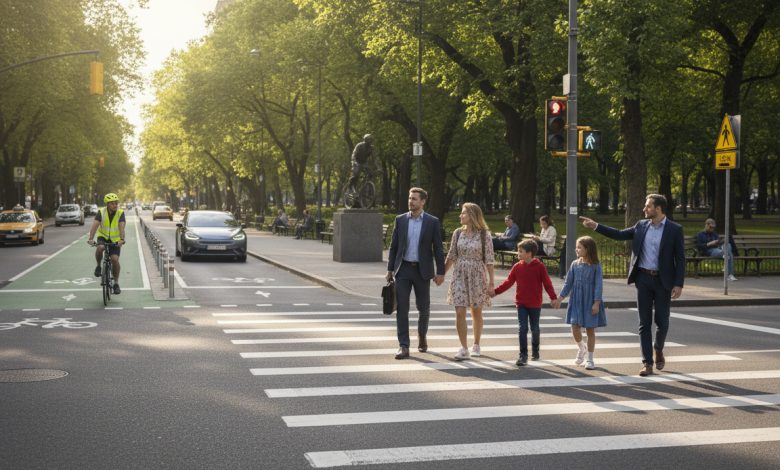
One of the most effective ways pedestrians can enhance their safety is by using designated crosswalks and obeying traffic signals. This not only reduces the risk of collision but also contributes to a more orderly flow of traffic.
Following Traffic Control Devices
Pedestrians should always follow the instructions provided by traffic control devices such as traffic lights and pedestrian signals. Ignoring these signals can lead to dangerous situations, as it may result in pedestrians entering the road when vehicles are not expecting them.
Making Eye Contact with Drivers
Before crossing the road, making eye contact with drivers can significantly enhance safety. This simple act ensures that drivers are aware of the pedestrian’s intention to cross, thereby reducing the risk of accidents caused by misunderstandings.
Increasing Personal Visibility at Night
At night, the risk of accidents increases due to reduced visibility. Therefore, pedestrians must take extra measures to make themselves visible to drivers.
Wearing Reflective Gear and Clothing
Wearing reflective gear and clothing can significantly increase a pedestrian’s visibility at night. This can include reflective vests, arm bands, or any clothing with reflective materials.
Using Flashlights or Mobile Devices for Illumination
In addition to wearing reflective gear, pedestrians can use flashlights or mobile devices to illuminate their path and make themselves more visible to oncoming traffic. This is particularly useful in areas with poor lighting.
Best Practices for Bicycle Safety on Public Roads
Ensuring your safety while cycling on public roads requires attention to detail and adherence to best practices. As a cyclist, you are more vulnerable to accidents than drivers of motor vehicles, making it crucial to be proactive about your safety.
Performing Pre-Ride Equipment Checks
Before you start your journey, it’s essential to perform a series of checks on your bicycle to ensure it’s in good working condition. This not only enhances your safety but also improves the overall cycling experience.
Inspecting Tire Pressure and Brakes
Proper tire pressure is vital for maintaining control over your bicycle and reducing the risk of punctures. Check your tire pressure at least once a week and before long rides. Similarly, functioning brakes are critical for your safety. Regularly inspect your brake pads and cables to ensure they are in good condition.
Ensuring Proper Helmet Fitment
A helmet is a crucial piece of safety gear for cyclists. Ensure your helmet fits properly by adjusting the straps and checking that it sits level on your head. A well-fitting helmet can significantly reduce the risk of head injury in the event of an accident.
Adhering to Rules of the Road
Understanding and adhering to traffic rules is fundamental to cycling safety. By following the same rules as motorists, you can reduce the risk of collisions and enhance your visibility on the road.
Signaling Intentions to Motorists
Clear communication with other road users is key to safe cycling. Use hand signals to indicate your intentions to turn or change lanes, giving motorists and other cyclists time to react.
Positioning Correctly in Traffic Lanes
Positioning yourself correctly in traffic lanes is crucial for visibility and safety. Take the lane when necessary to assert your presence and avoid being overlooked by motorists.
By following these best practices, cyclists can significantly reduce their risk of being involved in an accident. Remember, safety is a shared responsibility among all road users.
Preventing Pedestrian & Bicycle Accidents Through Awareness
The role of awareness in preventing pedestrian and bicycle accidents cannot be overstated. Staying alert and being mindful of one’s surroundings are critical components of safe commuting practices.
Minimizing Distractions While Traveling
Minimizing distractions is essential for both pedestrians and cyclists to avoid accidents. One of the most significant distractions is the use of mobile phones.
Avoiding Mobile Phone Use in Traffic
Using a mobile phone while walking or cycling diverts attention away from the road and surroundings, significantly increasing the risk of an accident. It’s advisable to refrain from using mobile phones in traffic to stay safe.
Staying Alert to Surroundings and Engine Noise
Staying alert involves being aware of the surroundings, including other vehicles, pedestrians, and road conditions. Listening to engine noise can also help anticipate the approach of vehicles.
“The key to safety is being aware of your surroundings and anticipating potential hazards.”
Navigating High-Risk Environments
Certain environments pose higher risks for pedestrians and cyclists, such as areas with heavy traffic or large vehicles.
Identifying Blind Spots for Large Vehicles
Large vehicles have significant blind spots that can hide pedestrians and cyclists. Being aware of these blind spots can help individuals avoid dangerous situations.
When possible, choosing routes with lower traffic volumes can significantly reduce the risk of accidents. Planning routes in advance can help in identifying safer paths.
| Safe Practice | Description | Benefit |
|---|---|---|
| Minimize Distractions | Avoid using mobile phones while walking or cycling. | Reduces accident risk by staying alert. |
| Stay Alert | Be aware of your surroundings and listen to engine noise. | Enhances the ability to anticipate and react to hazards. |
| Navigate Safely | Identify blind spots and choose low-traffic routes. | Decreases the likelihood of being involved in an accident. |
By following these guidelines and staying informed, pedestrians and cyclists can significantly reduce their risk of being involved in accidents.
By adopting the safety strategies outlined in this article, pedestrians and cyclists can significantly reduce their risk of being involved in accidents. A road safety summary highlights the importance of utilizing designated crosswalks, increasing personal visibility at night, performing pre-ride equipment checks, and adhering to the rules of the road.
A pedestrian and bicycle safety tips summary emphasizes the need for awareness and caution when traveling. Minimizing distractions and navigating high-risk environments with care are crucial for preventing accidents.
By following these guidelines, individuals can enhance their safety on public roads. Both pedestrians and cyclists need to be mindful of their surroundings and take proactive steps to protect themselves.
FAQ
Why is it critical to use designated crosswalks and follow traffic signals?
Utilizing designated crosswalks and adhering to NHTSA (National Highway Traffic Safety Administration) guidelines ensures that pedestrians move in patterns that motorists expect. Following traffic control devices significantly reduces the likelihood of unpredictable movements, which is a leading cause of urban accidents involving brands like Ford or Tesla vehicles.
How can I ensure drivers see me when I am walking at night?
Increasing personal visibility is vital for safety. We recommend wearing high-visibility clothing equipped with 3M Scotchlite reflective material. Additionally, carrying a high-lumen flashlight or using the illumination from a mobile device ensures you remain visible to drivers navigating poorly lit intersections.
What equipment should I check before operating a bicycle on public roads?
Before departing on a Trek or Specialized bicycle, perform a “pre-flight” check by inspecting tire pressure and testing the responsiveness of your brakes. Most importantly, ensure your Giro or Bell helmet fits snugly and is positioned correctly to provide maximum protection in the event of an impact.
How should cyclists communicate their intentions to motorists?
Cyclists should always use standardized hand signals to indicate left turns, right turns, and sudden stops. Maintaining a predictable lane position and making direct eye contact with drivers at four-way stops helps ensure that both parties are aware of each other’s planned movements.
What are the most common distractions to avoid while traveling in traffic?
The most dangerous distraction is the use of mobile devices for texting or browsing apps like Instagram. It is essential to keep your ears clear of noise-canceling headphones to stay alert to engine noise and sirens, which provide critical auditory cues about approaching vehicles.
How can I safely navigate around large commercial trucks and buses?
Awareness of blind spots, often called “No Zones,” is crucial when sharing the road with large UPS or FedEx trucks. If you cannot see the driver’s mirrors, they cannot see you. To minimize risk, whenever possible, choose safer routes with dedicated bike lanes or lower traffic volumes to avoid heavy commercial transit areas.